This post contains affiliate links. If you purchase through a link, I may earn a small commission at no extra cost to you. Full disclosure here.
Nothing ruins the start of a trip faster than arriving bloated, nauseous, or dealing with digestive issues before you’ve even left the airport.
I have IBS, which means I’ve had to get more deliberate about this than most people do. But even without a specific condition, long flights are genuinely hard on your digestive system — low humidity, pressure changes, sitting still for hours, disrupted meal timing, stress. Your body notices all of it.
After years of flying for both work and vacation, these are the habits that have actually made a difference for me.
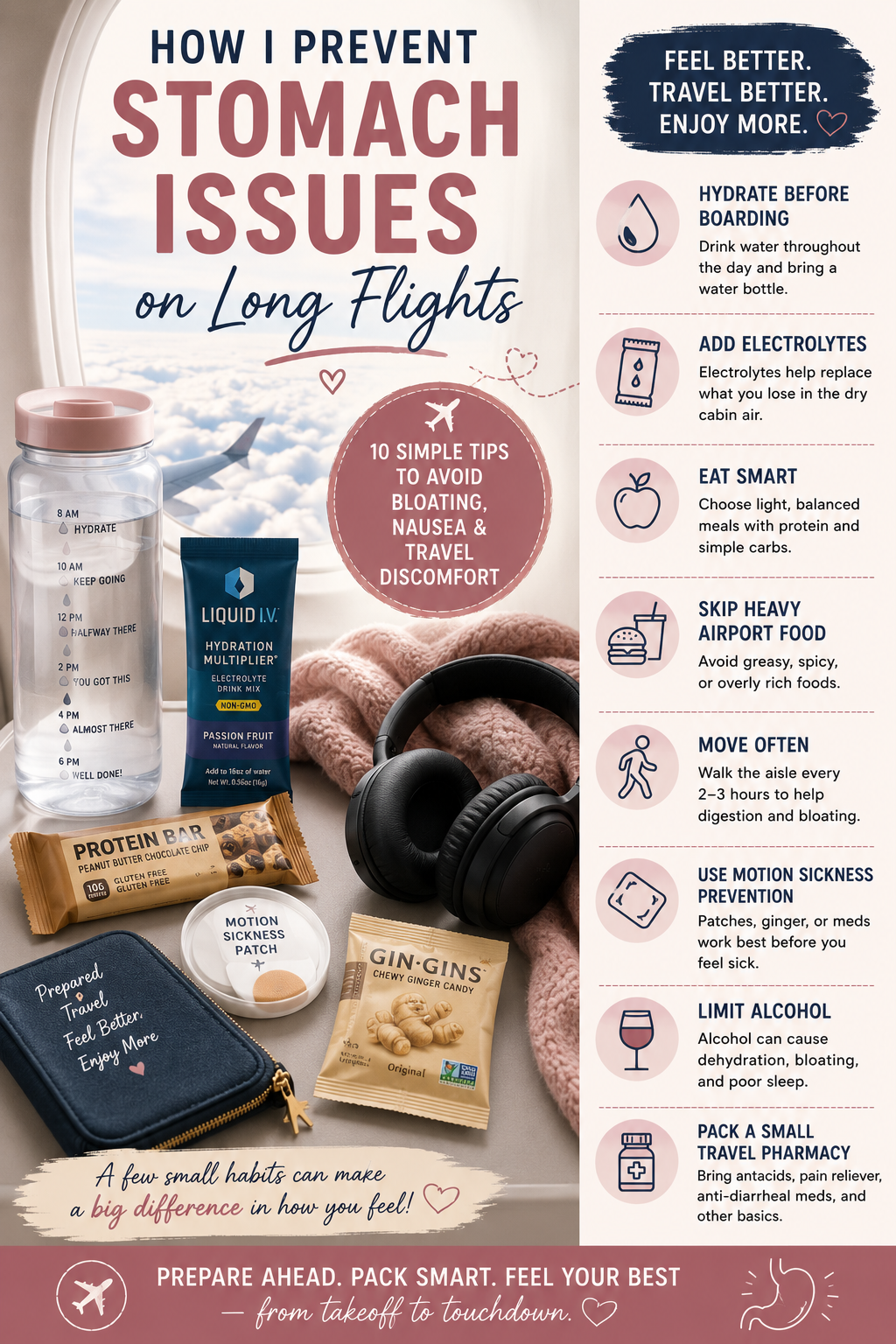
Start Hydrating Before Your Flight
Most travelers wait until they’re thirsty. By then you’re already behind.
Airplane cabins run at humidity levels so low they pull moisture out of everything — including you. The dehydration starts before you even reach cruising altitude, and it compounds over a long flight in ways that show up as headaches, fatigue, bloating, and general misery on arrival.
What I do: drink water steadily throughout the day before flying, bring an empty water bottle through security, and add a Liquid I.V. Hydration Multiplier packet once I’ve filled it past the checkpoint. One packet does noticeably more than plain water — it’s the difference between drinking a lot and actually absorbing it. The Concord Grape flavor is the one I keep coming back to.
Skip the Airport “Treat Yourself” Meal
Airport food is designed for impulse and convenience, not for how you’ll feel at 35,000 feet.
Greasy food, heavy portions, and alcohol are all harder to process in a pressurized cabin. For me specifically — with IBS — this is non-negotiable. But even without a digestive condition, most people feel the difference between boarding heavy and boarding light.
Before flying I skip: heavy fried foods, large burgers, excessive dairy, and anything very spicy. What I’ll actually eat before a flight: something with protein, fruit, rice, a simple sandwich, or easy carbohydrates that won’t sit heavily.
This doesn’t mean eating sad airport salad. It just means being honest about what your body can actually handle at altitude.
Don’t Fly on an Empty Stomach Either
The opposite mistake is just as bad.
Flying hungry — especially for IBS — can trigger nausea, headaches, and motion sickness faster than almost anything else. An empty stomach on a bumpy flight is not a good combination.
I keep a few things in my carry-on specifically for this: BUILT Bar Puff Protein Bars are my go-to because they’re light enough to eat when you’re not fully hungry but substantial enough to actually help. Trail mix, crackers, and pretzels round it out. A small snack every few hours keeps things settled in a way that nothing else quite does.
Check the Inflight Meal Before You Board
This one took me too long to figure out.
Most airlines publish their inflight menus online — and many let you pre-select special meals (low-fiber, low-fat, bland options) when you book. For anyone managing IBS or digestive sensitivities, this matters enormously. The difference between a standard inflight meal and a meal you’ve actually reviewed in advance is real.
Before any flight with meal service, I look up the menu, note what’s likely safe, and often pre-order an alternative. It takes five minutes and has saved more than a few trips.
Use Motion Sickness Prevention Before You Need It
Most people wait until they feel sick. By then, it’s significantly harder to manage.
The options I keep accessible: MQ Motion Sickness Patches go behind the ear and last up to 72 hours — one patch covers the flight and whatever comes after (buses, boats, winding roads). Chimes Ginger Chews are my gentler everyday option when I just need to settle things without medication. For turbulent flights, I use both.
If you’re prone to motion sickness at all, start prevention before boarding — not after the seat belt sign goes on during a rough patch.
Limit Alcohol
A glass of wine can sound like the right way to start a trip.
But alcohol at altitude accelerates dehydration, disrupts sleep quality even when it helps you fall asleep, increases bloating, and tends to produce worse headaches than it would on the ground. On overnight or international flights especially, the cost outweighs the relaxation.
I don’t drink on flights over a few hours. That’s a personal call, but it’s one I’ve never regretted mid-flight.
Go Easy on Carbonated Drinks
Cabin pressure causes gas to expand. This is straightforward physics, and your digestive system doesn’t get an exemption.
Carbonated drinks — even sparkling water — can cause noticeably more bloating and discomfort in the air than they would on the ground. For anyone already managing digestive sensitivity, still water is the clear choice. The flight attendant offering ginger ale with kindness is a nice gesture, but the bubbles are genuinely not your friend at altitude.
Skip the Coffee If You Can
I don’t drink coffee, which I’ve come to think is probably an accidental advantage on travel days.
For those who do: caffeine is a diuretic, which means it actively works against the hydration you’re trying to maintain. It can also irritate the stomach lining, increase acid production, and speed up motility in ways that become uncomfortable when you’re trapped in a small seat at 35,000 feet. Combined with the dehydration already happening from cabin air, it’s a lot for your system to manage.
If coffee is non-negotiable, the approach that seems to help: eat something substantial first, drink extra water alongside it, and keep it to one serving rather than refilling all morning before you board. Your stomach at altitude is a different environment than your stomach at home.
Walk Every Few Hours
Movement helps digestion more than most people expect.
Sitting still for hours slows everything down — circulation, digestion, all of it. Even short walks to the back of the plane and back help. I try to get up every two to three hours on longer flights, and on overnight flights I’ll do a few laps of the cabin before trying to sleep.
COOLOVER Copper Compression Socks also help here. They improve circulation in a way that reduces the heavy, stiff feeling that sets in on long-haul flights — and better circulation means everything is moving a bit more the way it should.
Pack a Small Travel Pharmacy
I keep a dedicated section of my airplane essentials pouch for stomach and health items, organized in a travel pill organizer so I’m not digging through loose packets mid-flight.
Stomach essentials: antacids, anti-diarrheal medication, Chimes Ginger Chews, MQ Motion Sickness Patches.
General: pain reliever, allergy medication, TheraTears Eye Drops.
Hopefully I won’t need most of it. But having it there means not spending the first hour at my destination looking for a pharmacy.
Prioritize Sleep
Poor sleep affects digestion more than most people connect.
I’m noticeably more prone to stomach issues and motion sensitivity when I’m running on bad sleep. Before a long-haul flight I try to sleep well the night before, and on the plane I use Bose QuietComfort Headphones and an Albatross Eye Mask to actually rest. The noise cancellation makes a bigger difference than I expected — engine drone is more disruptive to sleep than you realize until it’s gone.
The better rested I board, the better I feel on arrival. It’s that straightforward.
My Long Flight Survival Kit
For flights over four hours, this is what’s always with me:
✓ Liquid I.V. packet
✓ BUILT Bar Protein Bar
✓ Motion Sickness Patches
✓ Ginger Chews
✓ TheraTears Eye Drops
✓ Portable Charger
✓ Noise-Canceling Headphones
The goal isn’t a perfect flight. It’s arriving at your destination feeling like a person — not spending the first day of your trip recovering from the journey.
As an Amazon Associate, I earn from qualifying purchases. See my full Affiliate Disclosure for details.
 Practical Cozy Travel